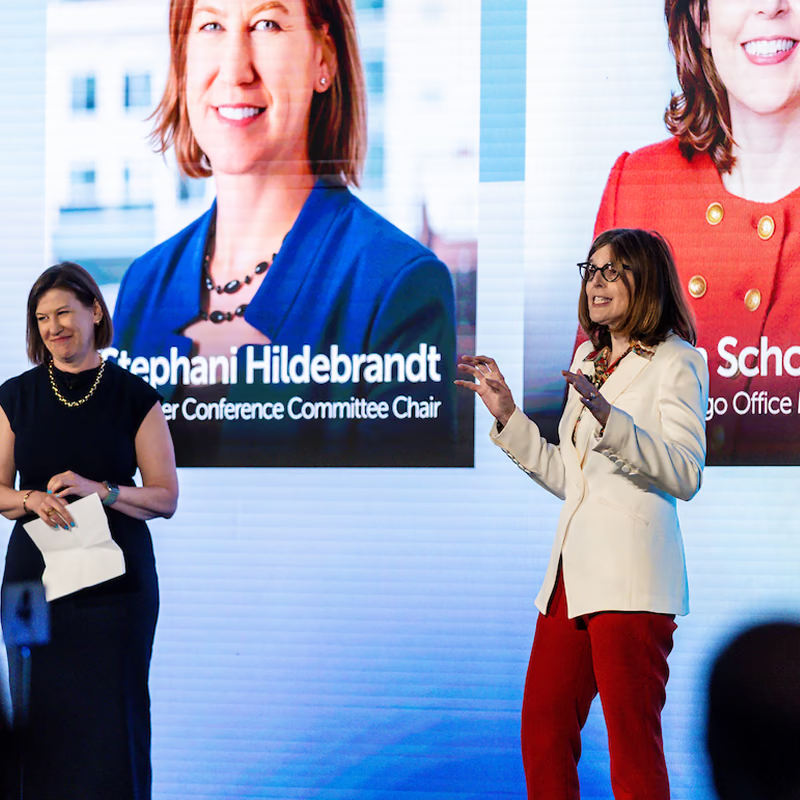

For most law firms, the annual partner conference is one of the biggest investments they make in bringing their leaders together. Planning often starts with the venue, the agenda and the guest speakers, rather than a much more important question: what do we need people to think, do or prioritise differently when they return to the office?
The best CMOs would never launch a major campaign without being clear on the audience, the message and the outcome they want to achieve. Yet many conferences are planned in exactly the opposite way. The logistics are meticulous, but the purpose of the event is often less clear.
Annual conferences are one of the few moments in the year when leadership has the full attention of the partnership. Done well, they help people understand where the firm is going, build support for important decisions and create a shared sense of what comes next.
The most effective conferences are built in much the same way as a major marketing campaign. They start with a clear objective, a clear audience, a simple message and a way of measuring success. The event itself is only one part of the process.
Start with the outcome
One of the most common mistakes is starting with the agenda.
Leadership updates are planned using last year's format. The usual panels are scheduled. An external speaker is brought in. The agenda starts to take shape long before anyone has properly defined what success looks like.
In the run-up to the event, could your marketing, communications or events team clearly explain what the conference is designed to achieve?
That objective should shape every decision that follows. It might be building support for a new growth strategy, encouraging partners to work together more effectively across practices, or getting a major change programme moving. Without that clarity, the conference risks becoming a collection of presentations that are interesting in the moment but quickly forgotten.
Be clear on the story
Few people will remember every slide, statistic or chart from the plenary sessions. They will remember the narrative behind them.
The strongest conferences help people answer three questions: how did we get here, what is the reality today and where are we going next?
That shared understanding can be one of the most valuable outcomes of the entire event. People leave with a clearer picture of the firm's direction, why it matters and the role they play in delivering it.
Create space for conversation
The information itself is rarely the reason people travel to a conference. Most of it could be shared through the app or welcome pack.
The real value comes from the conversations around the content.
What people cannot get from a webinar is the discussion over coffee, the conversation after a breakout session or the chance encounter at dinner that changes how colleagues think about working together.
The firms that get the greatest value from these events create time for discussion, challenge and connection, rather than filling every available slot with more content.
Don't overlook culture
Culture is shaped by what people experience, who they spend time with and the behaviours they see rewarded. A conference creates a rare opportunity to reinforce all three.
The most effective events recognise that networking, discussion and connection are not breaks from the programme. They are part of the programme, and require space and time.
Being clear about the behaviours and culture you want to reinforce helps shape an event that brings out the best of the firm.
Measure what happens next
Post-event feedback is useful. The comments about the venue, the speakers and, inevitably, the food all have their place.
But satisfaction is not the same as impact.
The real measure of success comes months later. Are people more aligned around the firm's priorities? Are relationships stronger? Have important decisions moved faster? Is there greater commitment to the direction of the business?
Five questions to ask before you start planning
Before booking a venue or building an agenda, ask:
What specific outcome are we trying to achieve?
What behaviour do we want to influence?
What is the one message attendees should remember?
How do we create enough time for meaningful discussion?
How will we know six months later whether the event was successful?
The firms that get the most value from their annual conference do not see it as an event. They see it as an opportunity to move the business forward. The venue, speakers and agenda all matter, but only if they support a clear outcome.
Like any successful marketing campaign, the real test is not what happens on the day. It is whether people leave with greater clarity, stronger commitment and a shared understanding of what happens next.